Reflections of Summer
Sutton Taylor12th December to 6th February, 2016
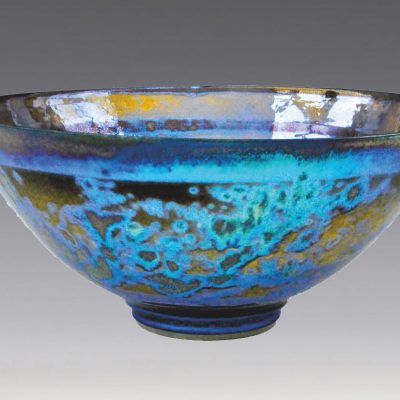
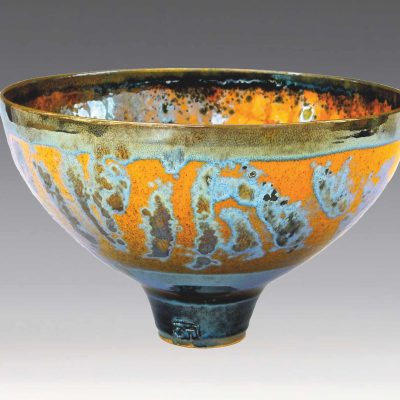
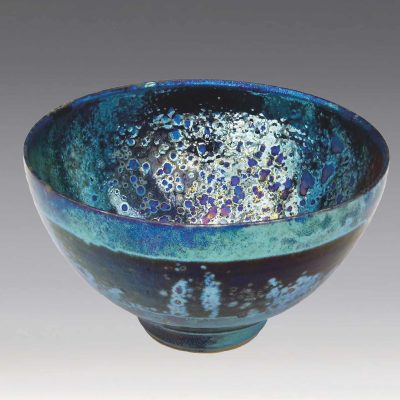
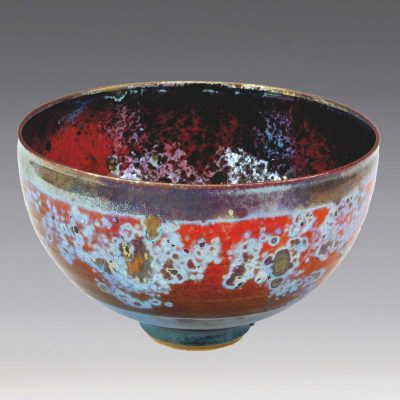
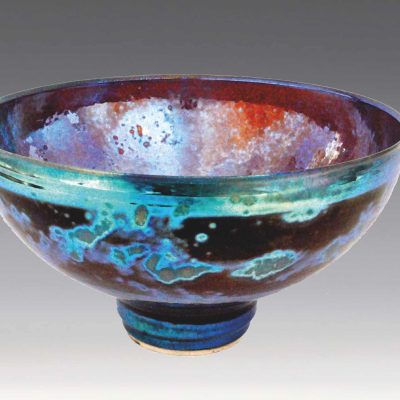
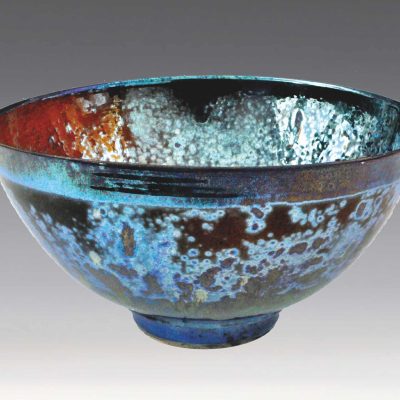
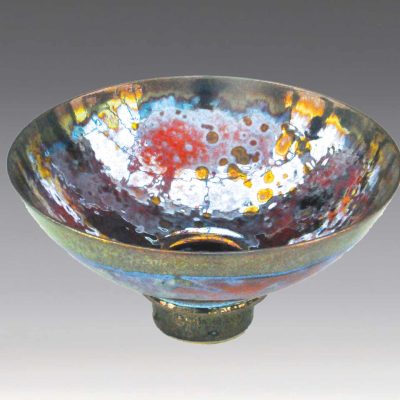
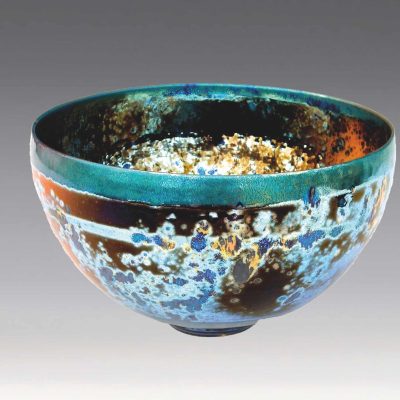
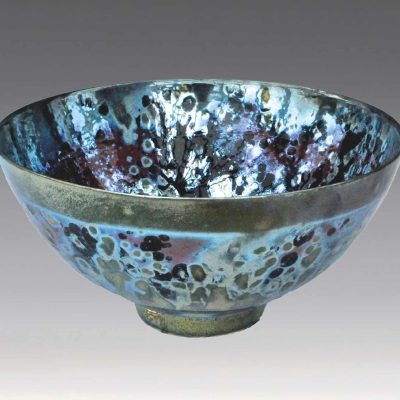
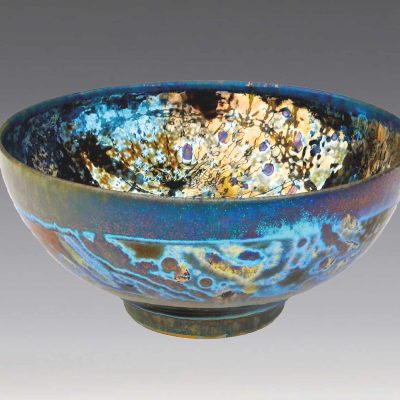
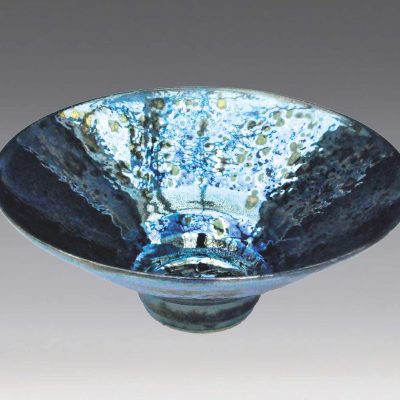
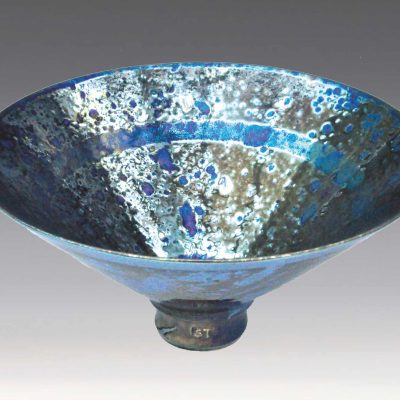
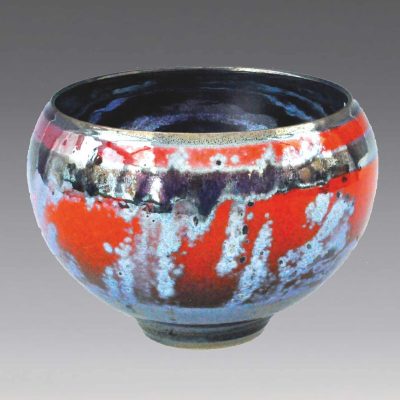
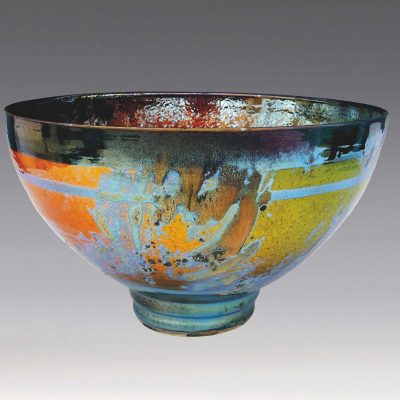
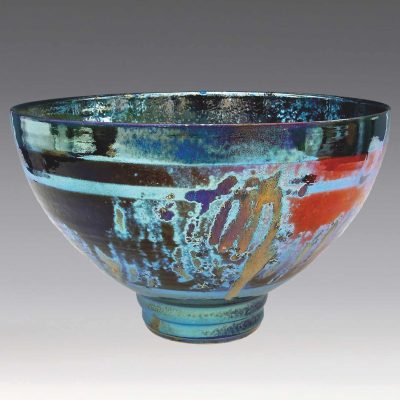
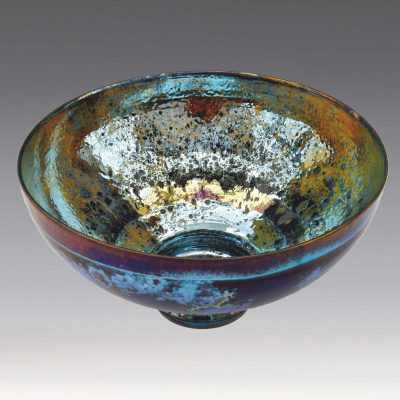
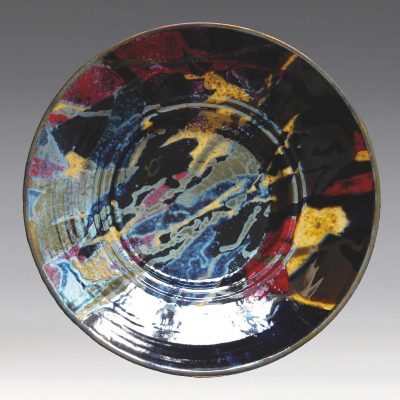
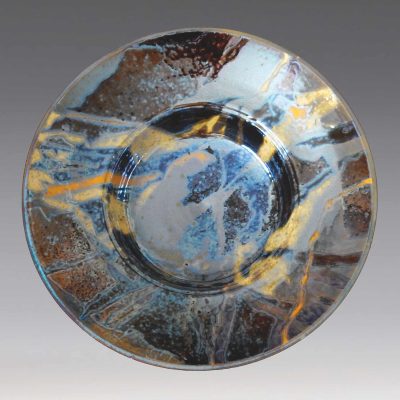
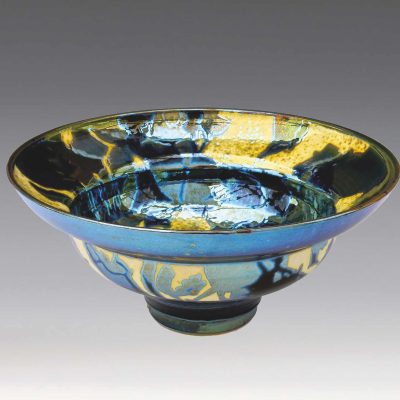
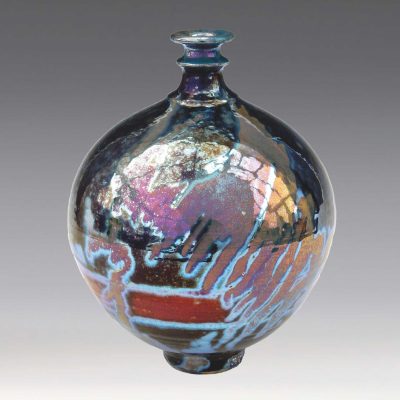
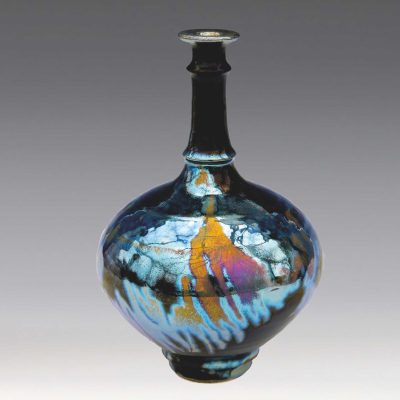
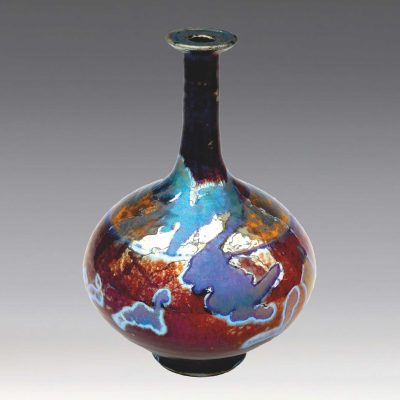
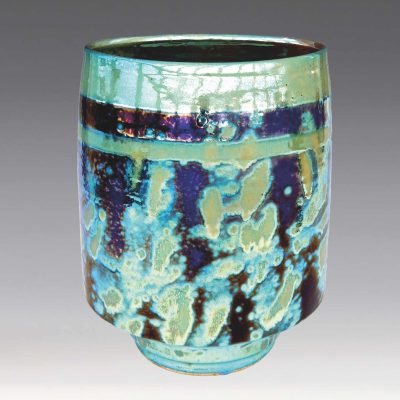
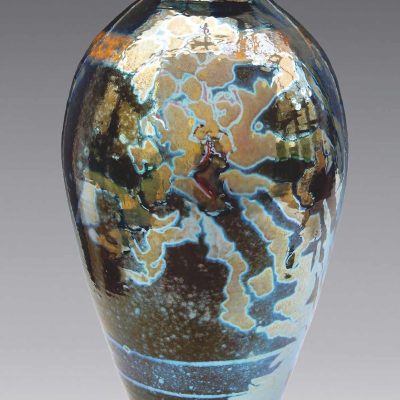
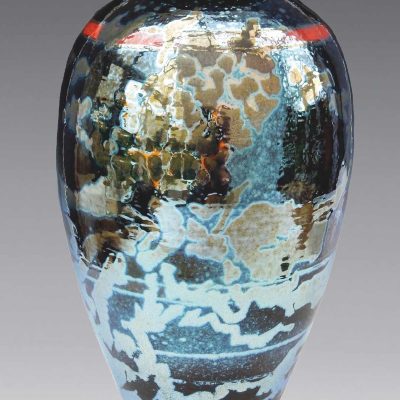
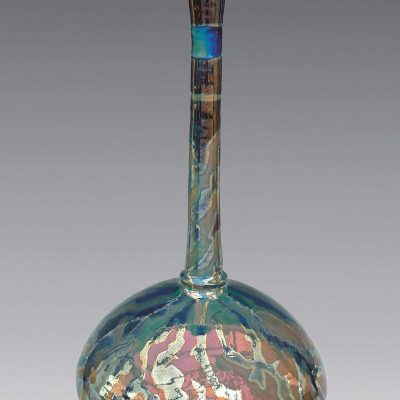
But alas after a series of highly successful firings inexplicably the process stopped working reliably and I had to back-track. Reluctantly one has to accept that firing pots to the point of destruction can never be sufficiently finely controlled with an instrument as blunt as a pottery kiln and that losses (sometimes heavy) are inevitable. Thus it has been throughout the thousand year history of this technique and fortunately the losses are compensated for by brilliant successes.
The process being so notoriously technically challenging I am sure that all lustre potters take comfort in the oft quoted passage from the 16th century chronicler of potter Pilcolpasso – of Lustre he says – The art is so uncertain that of a hundred pieces hardly six are good ….. but when they work they are paid for in gold. Hence the secrecy which has surrounded Lustre throughout its history and its connection to alchemy and fascinating accounts of secret kilns, firings taking place behind locked doors, secret glaze recipes and knowledge dying with the potter.
This is all nonsense. There are no `secret` glaze and pigment recipes. The recipes are all straight-forward and discoverable. Historic glazes can and have been analyzed and are reproducible – although some which contain high quantities of mercury, lead and arsenic are highly undesirable.
The `secret` is in the firing – in the knowledge, intuition and instinct of the firer. It is in responding to the mood of the kiln. Every firing feels different – even the weather has to be taken into account. Humidity and wind speed affect the optimum reduction point. Instinct and intuition cannot easily be passed on and must often die with the firer.
It remains difficult to comprehend why it remains so hard to control more accurately. In theory it should be pretty straight-forward. Metals – principally silver, copper and gold – are suspended in or painted on the surface of a glassy glaze and fired to the critical point where the glaze is molten and the metals beginning to volatise. At this point oxygen is excluded form the kiln and the metals which will have oxidized during the firing are reduced, i.e. returned to their pure metallic state – high concentrations of metal produce pure metal, whilst dilutions form transparent colours. Between them silver, copper and gold can cover the whole color spectrum. However they each have different volatisation points, so multiple firings are needed for some colour combinations. Unfortunately it is rather easy to turn gold to gas which is lost via the kiln flue.
So why persist with a technique so open to expensive failure and disappointments. The only answer must be that when it is successful I delight in the results. And so do others. People who like Lustre like it with a passion.
