Divergence : Convergence
In Response to Landscape
David Roberts18th November to 2nd December, 2017
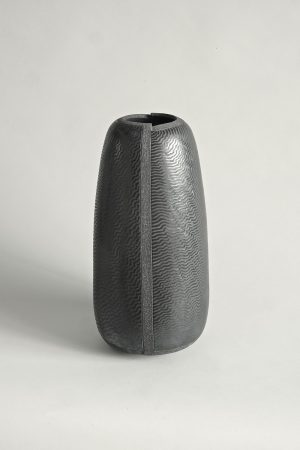
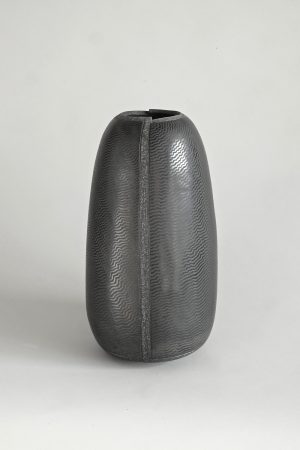
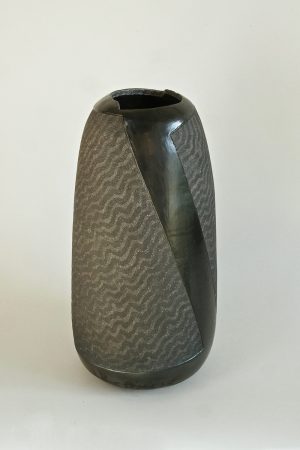
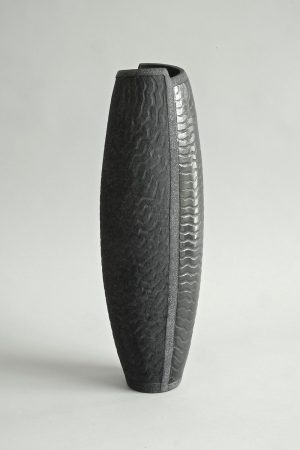
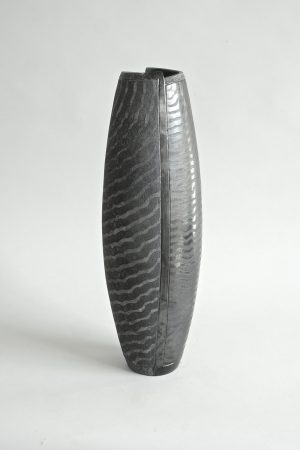
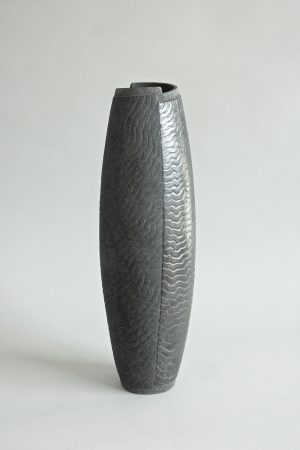
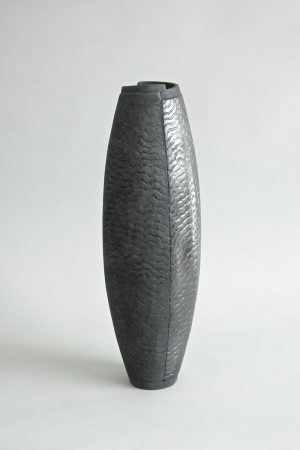
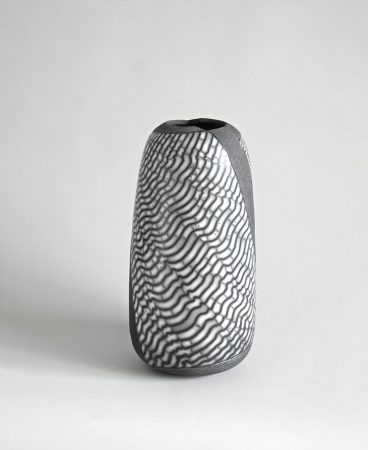
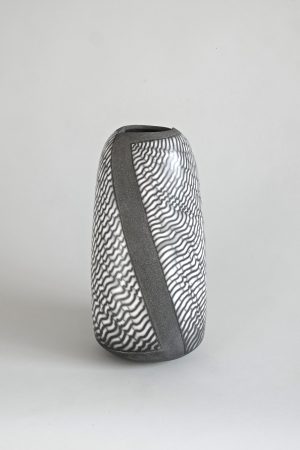
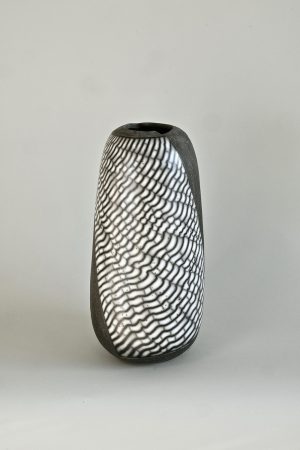
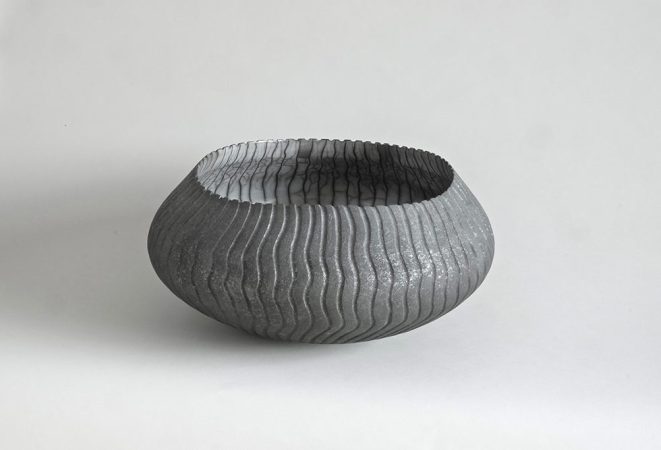
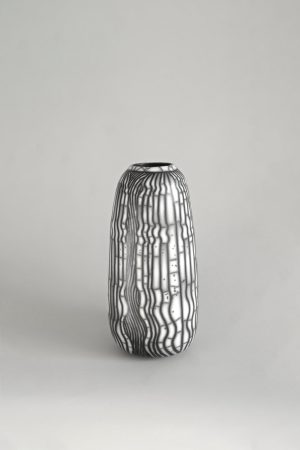
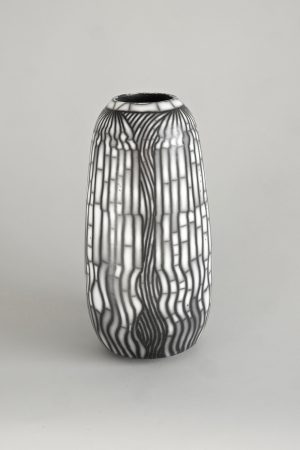
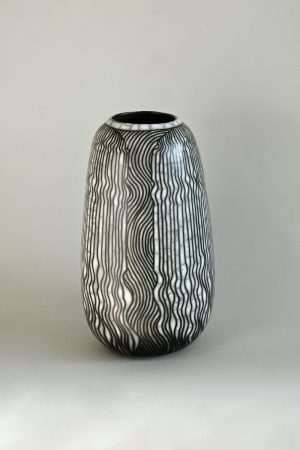
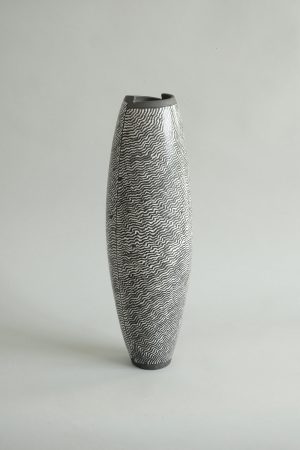
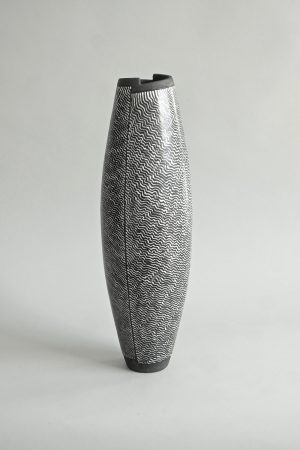
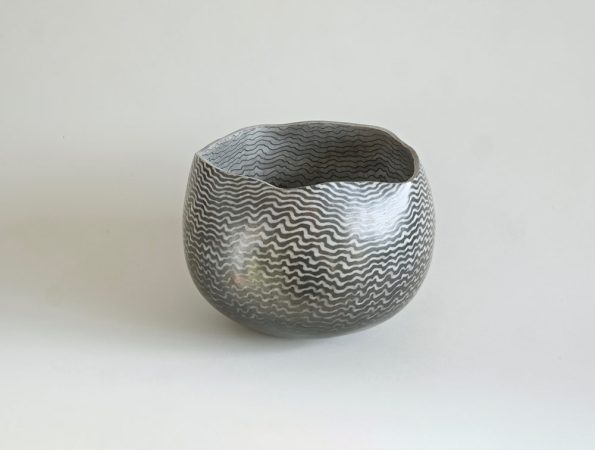
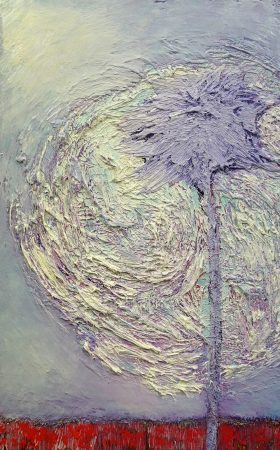
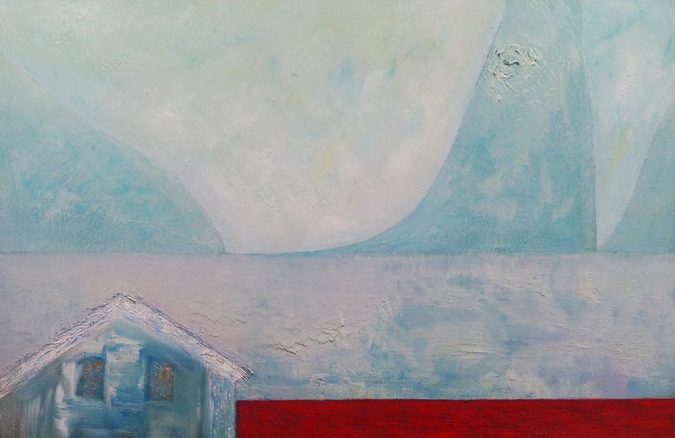
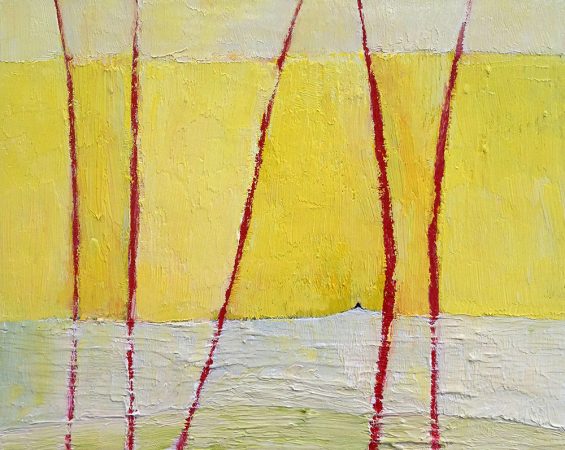
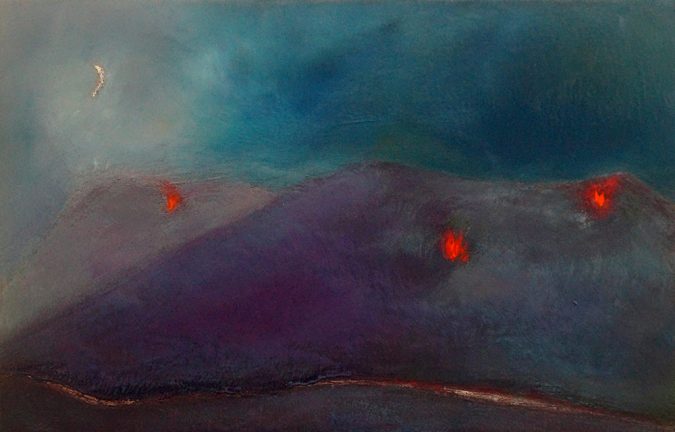
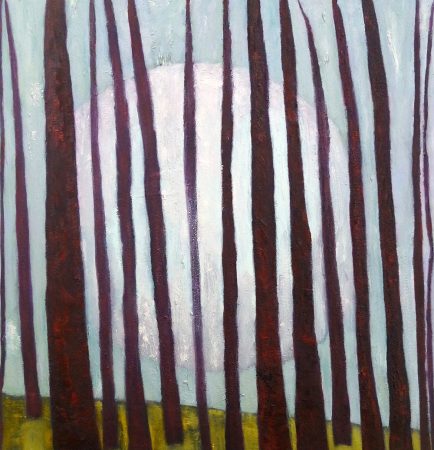
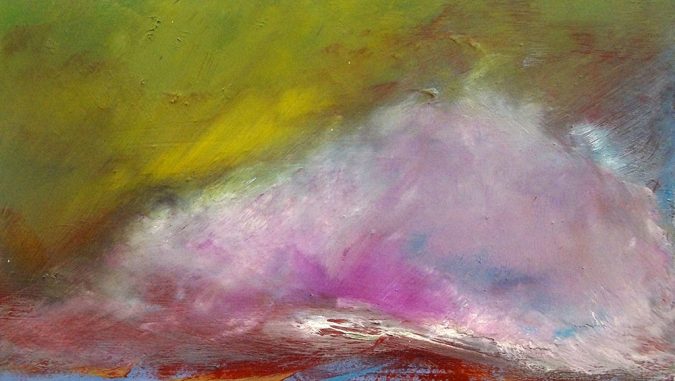
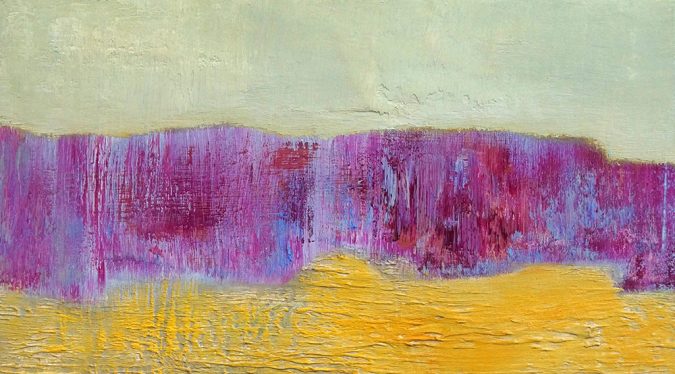
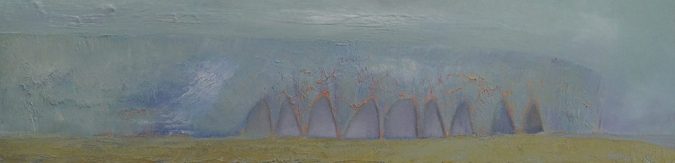

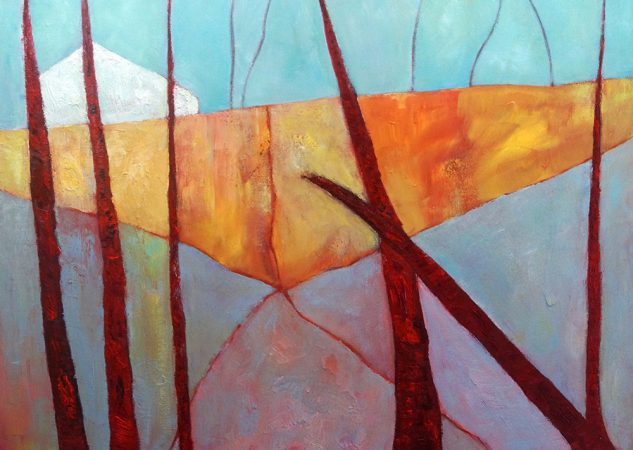
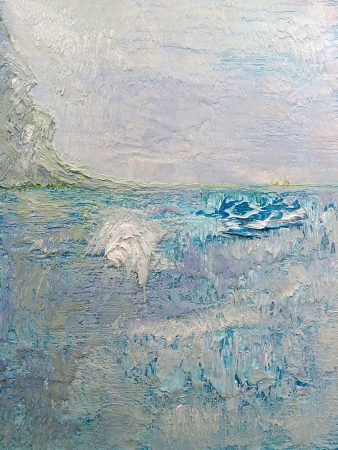
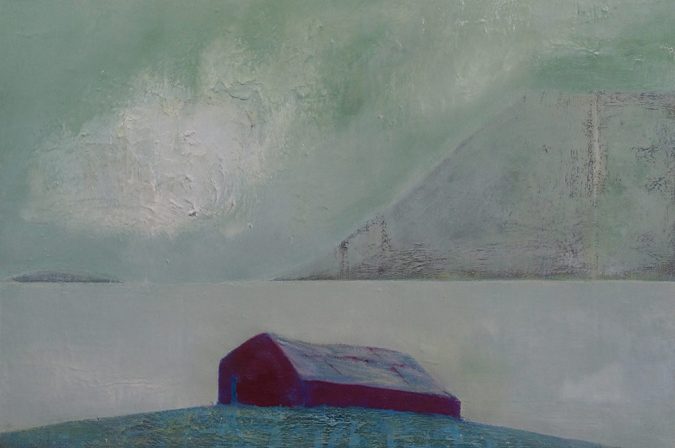
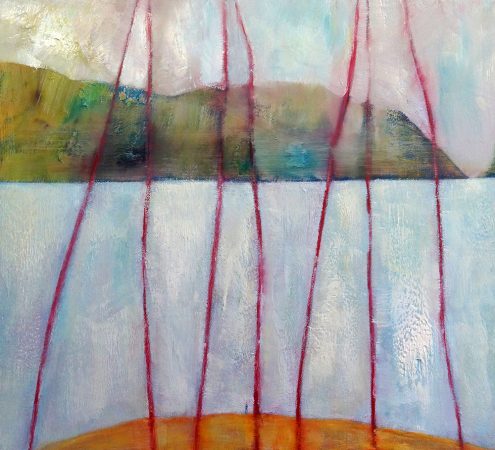
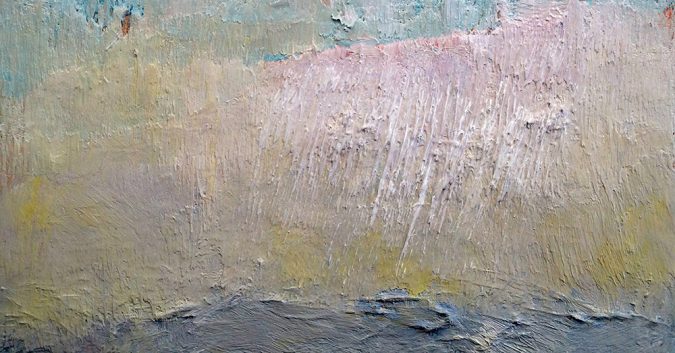
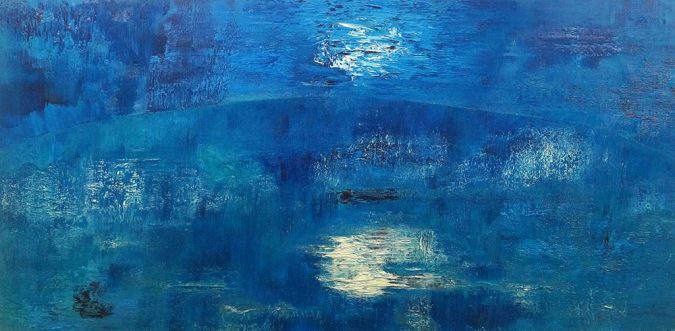
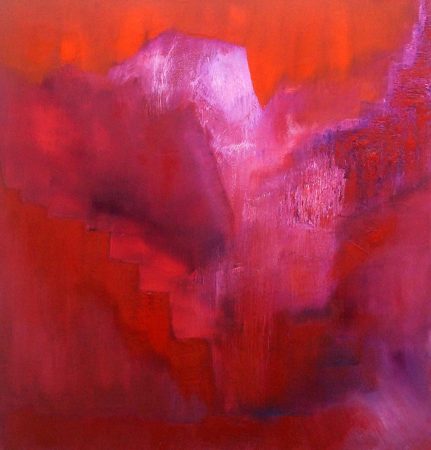
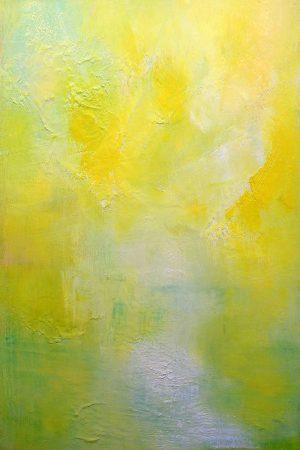
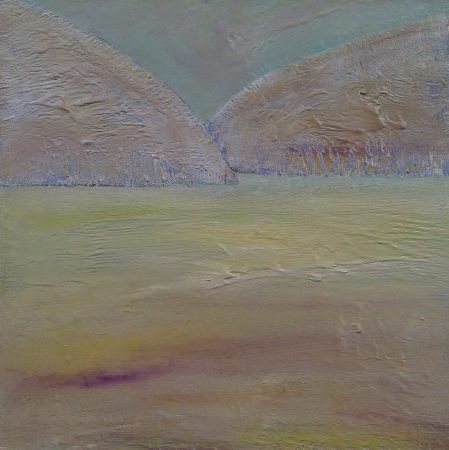
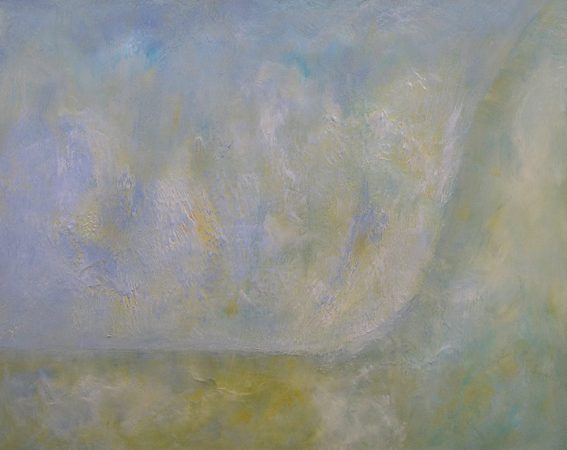
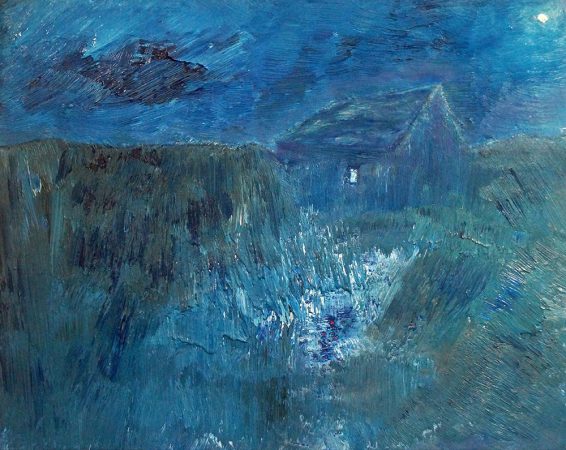

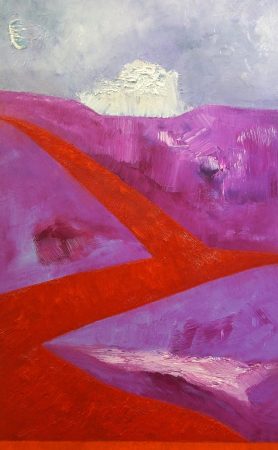
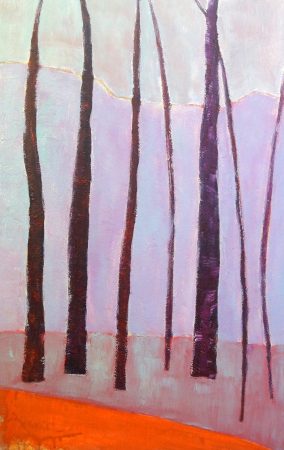
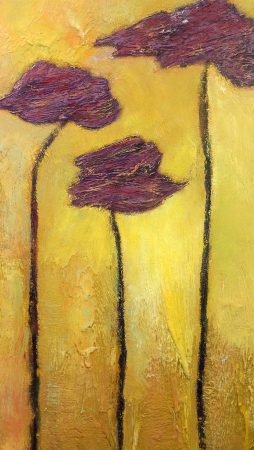
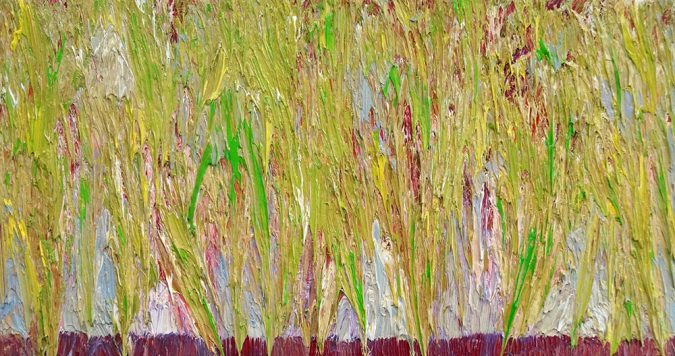
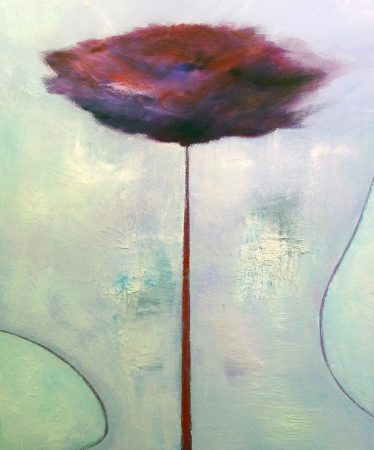
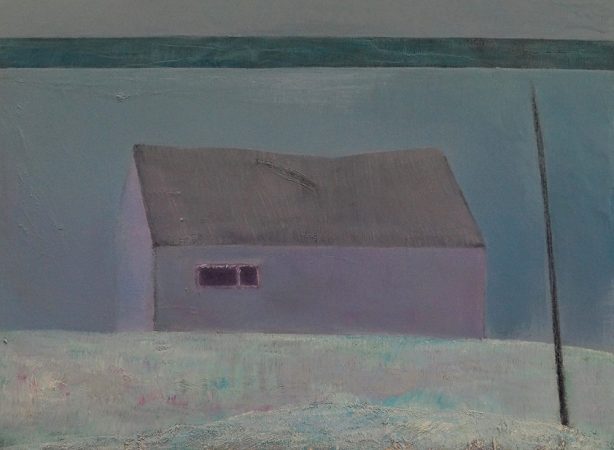
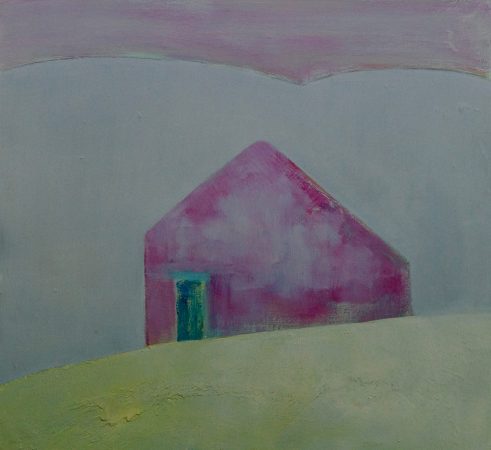
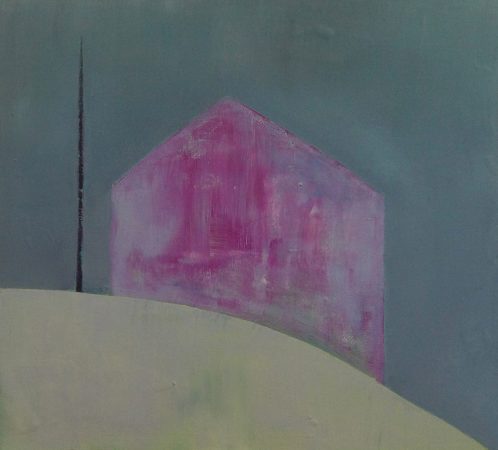
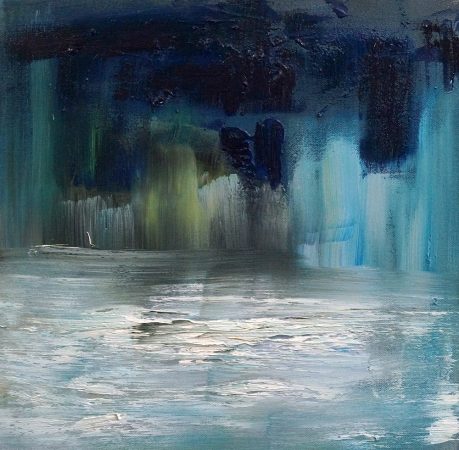
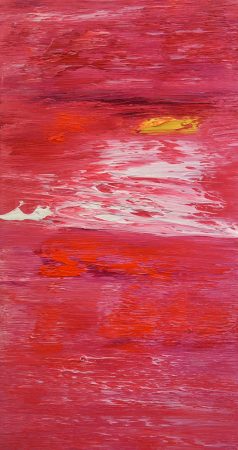
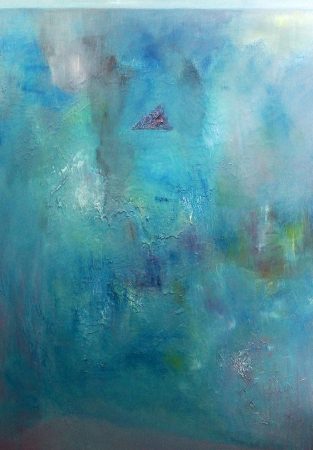
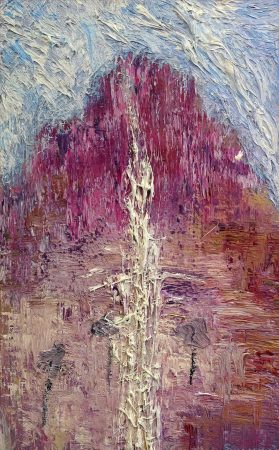
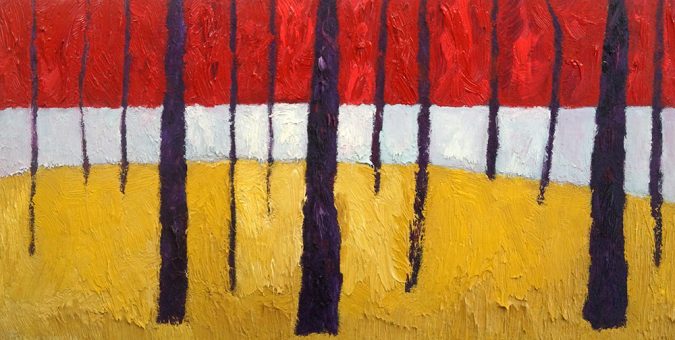
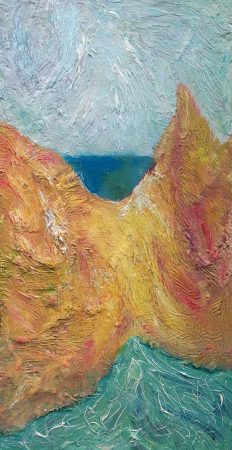
To help me in this endeavour I invited a painter, Andy Fullalove, to exhibit with me. Louise Jones, the director of Lemon Street Gallery, kindly agreed to my request. I have great admiration for, and empathy with, Andy’s work. Like me, he responds to and engages with the magic of landscape. His paintings are not topographical but express feelings, impressions and reactions to specific landscapes and their features. Like my ceramics his paintings are visceral, celebrating the physicality and plasticity of his chosen medium. Although both mine and Andy Fullalove’s pieces are obviously very different I believe this combination of pots and paintings will make for a convincing exhibition.
David Roberts, October 2017

A small collection of rocks sits neatly aligned on a desk in the corner of the studio. Like small sentries guarding the paint brushes and other artist materials strewn more haphazardly behind, these seemingly inconspicuous, rough-hewn objects, collected from around the Cornish coast, are Andy Fullalove’s primary inspiration for this new collection of paintings. As one picks them up and begins to examine them, one is struck by their often startling red and blue colourations, and jagged forms. These mementos are Fullalove’s Rosetta Stone for unlocking the Cornish landscape.
Unlike many painters who find inspiration in the landscape, be they from Cornwall, or Fullalove’s adopted Yorkshire, his is not a poetic depiction of places we can go and visit. Rather, it is the patterns found within the landscape, coupled with a sense of an elemental timescale that extends well beyond the fragility of humanity, that are the most important considerations in the depiction of place and its understanding in Fullalove’s work. It is not surprising that the geology and patterns within the landscape are what draw Fullalove as an artist. His is not a painting of surface features, but one that finds emotional and psychological resonances within the landscape to depict a submerged narrative. Geological time implies a layering of history, a sense of compression and weight. The sediment of the artist’s personal history runs throughout this collection of paintings and elicits multiple readings of the work as one uncovers their meaning layer by layer. For Fullalove, this symbolism and the resulting multiplicity of understanding is a core element of his work. It has its origins in a very personal experience – witnessing at first hand the IRA bombing of Warrington on 20th March 1993. Although Fullalove has been painting since the age of 10, having been gifted his grandfather’s oil paints and brushes, it was only after going through this traumatic event that his perception of the everyday changed, and since that time, Fullalove has described his painting as ‘coming from a different place’.

In Fullalove’s exhibition Paintings from Another Place (2015) dark hues predominated, a reflection of personal circumstances at the time. Painting was stripped back to its fundamental elements of composition, balance, and light. In this new exhibition, colour is once again evident. In fact, this current collection of work represents Fullalove’s most vital and startling use hue and tonal contrast to date. Where tonal contrast is most evident is in the trilogy Landscape in Red, Landscape in Blue, Landscape in Yellow, and Surrounding Solitude, the bold juxtaposition of colour is at its most arresting in Red Raw and the orange, red, and magenta of Return to Isolation. The dramatic intensity of colour in these paintings is at times, reminiscent of the expressionist landscapes of Emil Nolde. In many instances, it is Fullalove’s smaller paintings that explore the extremes of colour, flatness of surface or an almost geological layering of paint to create a visceral intensity: their relative size belying their artistic ambition and emotional scope.
Following the creation of this body of work over the past year has been a fascinating experience. Whilst some paintings, such as the exuberant Red Raw, have remained unchanged, for others the transformation has been quite radical. In the latter instances, the actual composition of the painting has not been altered, it is the colour palette that has changed. This reconsideration of the tonal qualities of a painting results not only in the emotional charge of the work changing but, in certain cases, the visual reading of the painting itself. The first version of Fractured was dominated by bold autumnal colours, a building standing resolute within a heavily accented landscape by the barren tree-like structures stretching beyond our field of vision. In the final version of the painting, the reworking of the outer two divisions of the landscape to a predominantly blue tone creates a visual extension of the sky downwards. Rather than an autumnal landscape, the painting now takes on a far more dramatic tone. One which depicts the ghostly resonance of a house edging ever closer to a disastrous tipping point, precariously balanced on a rock which is itself delicately balanced on another. The viewer’s eye-line is drawn both to the fulcrum at the centre of the painting, and the leftward leaning rock on which the house is balanced. The lightening of the tonal qualities of the painting’s internal drama is offset by increasing the red saturated hues of the tree-like structures. In the final version, the bold upwards right to left arc of a ‘tree’ accentuates the perceived imbalance of the rock, its movement to the left, and its implied final cataclysmic fall.

Fractured contains two of the three key symbolic elements used in this collection of paintings: the haven or shelter, and tree-like structures. In Constant, Silent the density of these foregrounded tree-like structures almost completely masks the third symbolic element in these paintings – the Moon. For Fullalove, the Moon is a symbol of life and balance. In conversation, Fullalove acknowledges the crepuscular landscapes of Samuel Palmer (1805-1881) as another influence, particularly the artist’s balancing of shadow and light. This duality and other Romantic imagery associated with the Moon such as melancholy, loneliness, love, and inconstancy are also evident in readings of the paintings if we so choose. However, watching Fullalove become animated when discussing how the very size of the moon – much larger in ratio to the Earth than any other satellite in the solar system – is what may make life possible, it is clear that it is actually the physical effect these celestial objects have on one another and the delicate orbital balance they are in, that is uppermost in the artist’s mind. In the paintings, the balance between the Moon and the Earth can also be taken to represent that between humanity and nature, and between people. Knowing the inner strength Fullalove derives from the Moon and his symbolic use of trees a painting such as A Constant Within is as close to a self-portrait that we are likely to find in his work.

In Fullalove’s paintings, the presence or absence of people is always implied. Our presence as invited viewers in these landscapes is a given. In addition, isolated buildings offering shelter or haven suggest habitation, either past or present. As children, we have all drawn our house, most often with our family as more or less elaborate stick figures standing outside. It is a metaphor for safety, unconditional love, and a relative sense of permanence. In the series of paintings that includes From a Silent Place, Partial Haven, Silent Place I-III, and A Sheltered Haven, the shelter or haven takes on many different meanings. We question its isolation, and whether it is inhabited or derelict. Is it a place of seclusion and escape, or a place of refuge having been cast out? Is the land slowly reclaiming it, subsuming it to become yet another geological layer of the history of the landscape? The seeming permanence of stone and the security of ‘dwelling within’ are cast adrift. Time may pass slowly in these paintings, but it is always in a state of flux just as our lives are. This sense of passing time is reflected in the surface flatness of Silent Place I-III. The unexpected transparent pinkness of the building gives it a vaporous impermanent, almost eerie quality. In Landscape in Red a similarly ghostly house topples into an abyss –perhaps the final resolution of Fractured.
In this collection of paintings, such resolution is hard to find. Fullalove invites us to witness the landscape in transition. The raw, geological, elemental energy these paintings exude is dramatic and intoxicating. These are paintings that demand to be seen. We cannot be passive observers. Like all the best art, when we really see, we are changed. We walk out into the landscape and witness it anew.
Monty Adkins, Composer November 2017
